

GAINSVILLE, FLA – To improve my chances, and because wandering around sandy scrub at dawn yelling ‘tortoise, please’ isn’t a real strategy, I arranged to meet Katherine Saylor, the Southeastern Representative for Defenders of Wildlife. She has spent years working on practical, long-term solutions for imperiled species, and she knows exactly why these shy, slow-moving reptiles are so important in Florida.
The only tortoise native to the Southeast (and why that matters)
Gopher tortoises are the only tortoise species found east of the Mississippi River. They live in dry, sandy uplands such as longleaf pine, oak scrub, sandhills, and even coastal dunes. These are places where digging is easy and sunlight reaches the ground.
That’s the key: gopher tortoises need open, sunny habitats with low-growing plants for food. When the forest canopy closes in and shade takes over, their food disappears, and so do they.
One tortoise, an entire neighborhood
Katherine explained that gopher tortoises are a keystone species, which means they shape the entire ecosystem around them. They don’t just live in the habitat; they actually build it.
Their burrows provide shelter for up to hundreds of other species in Florida, including snakes, mammals, birds, and many insects and other small animals. Think of it as the original Florida starter home: cool, stable, and always available when the weather turns violent, which in Florida happens pretty often.
Those burrows also help other wildlife survive extreme heat, drought, and even fire. Underground, the temperature and humidity stay fairly constant, making a gopher tortoise burrow one of the best natural refuges in the state.
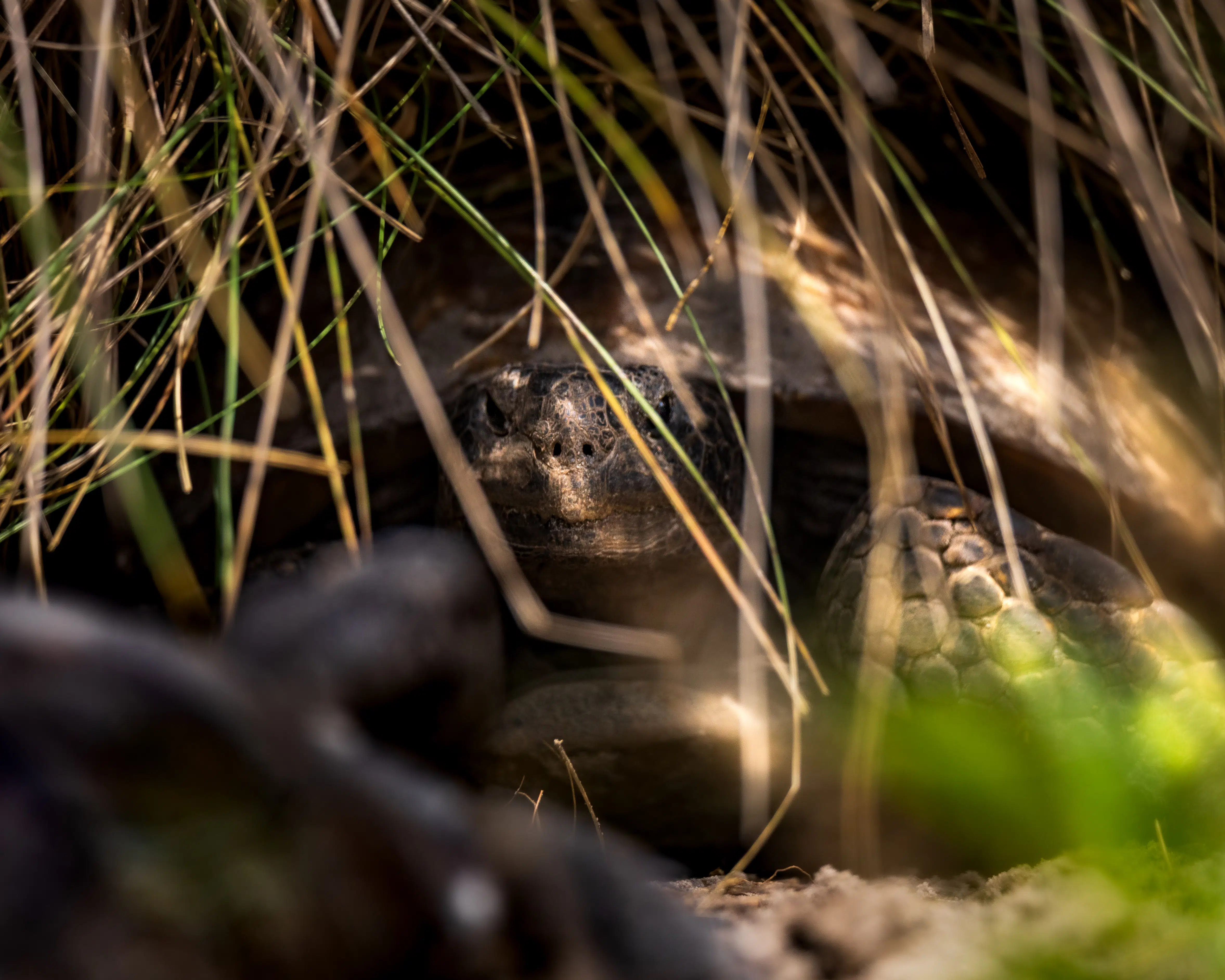
The habitat problem: Florida’s “high and dry” is disappearing
We filmed in oak scrub and longleaf pine habitat, an ecosystem that once covered a large part of the Southeast. Today, more than 90% of that habitat has been lost because of development and lack of management.
The issue is painfully simple: the places gopher tortoises want to live are the same places humans want to build.
Flat, high, dry land is perfect for tortoises and also for houses, roads, apartments, and almost anything that comes with a mailbox. When development spreads into these uplands, tortoise habitat gets fragmented or destroyed, and burrows can be buried, blocked, or erased.
Also, many of these ecosystems depend on fire. Without regular prescribed burns or natural fires, woody plants take over, the habitat becomes thicker and shadier, and it slowly stops being suitable for tortoises.
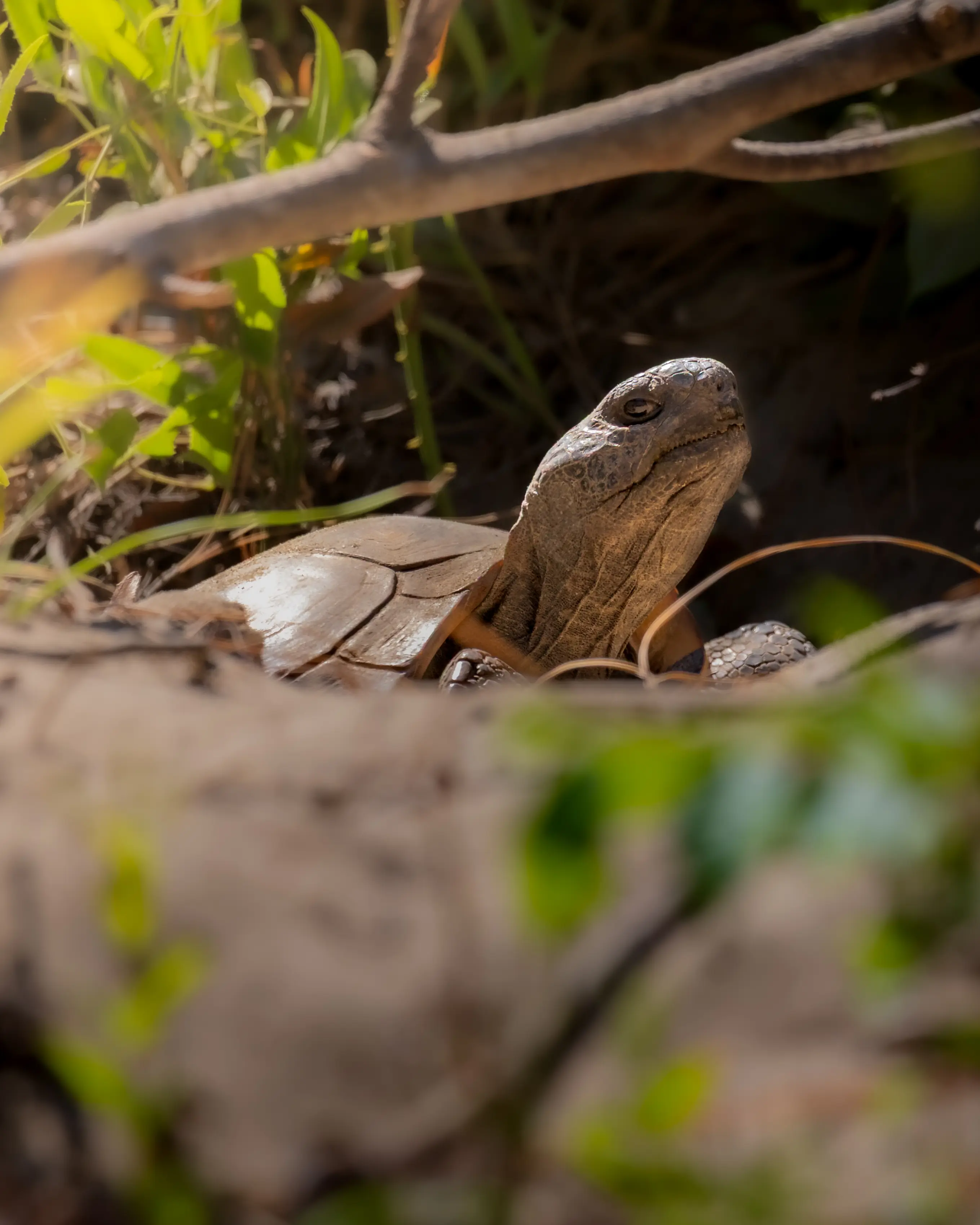
Why they’re so hard to find (even when they’re right there)
I learned quickly that gopher tortoises spend most of their lives underground. They come out to bask, forage, and sometimes socialize, but if you’re picturing a tortoise casually posing for your camera like it’s an influencer, that’s not going to happen.
Their burrows can be surprisingly deep and long, sometimes reaching about 40 feet in length and usually about six feet below the surface. According to the National Park Service, gopher tortoise burrows can stretch up to thirty feet long and reach depths of eight feet, sometimes even more, which shows just how extensive their underground homes can be—so when you’re standing at the entrance wondering what’s inside, there is a lot more to these burrows than meets the eye. Anyone home?’ there’s a good chance they’re deep inside, enjoying their perfectly climate-controlled bunker.

In the Loop: Theme Park Scoops gives you the latest and greatest info from all the Central Florida parks.
The twist: the tortoises weren’t in the state park
Here’s the part that hit me the hardest: even after all that effort, the gopher tortoises I eventually found weren’t in the state park two hours away.
They were ten minutes from my house—in the middle of suburbia.
That’s the real lesson from the whole experience. Nature isn’t always a far-off adventure. Sometimes it’s right outside your door, or even under your feet. Once you realize that, protecting wildlife habitat feels less like an abstract ‘save the planet’ idea and more like protecting the place where you actually live.
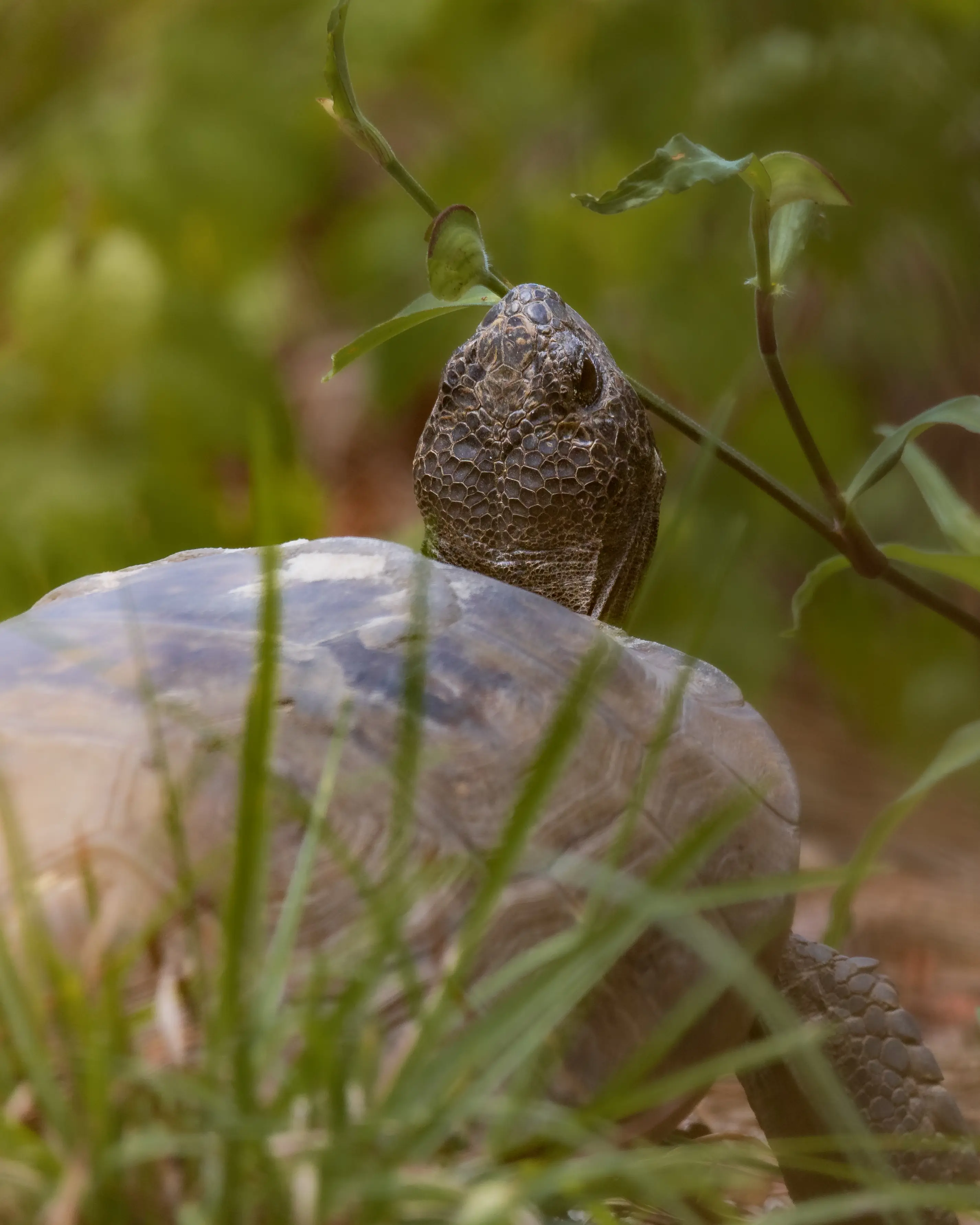
A few extra gopher tortoise facts (and where to learn more)
Defenders of Wildlife has great resources on gopher tortoises, including why they’re considered a keystone species and how their burrows support hundreds of other animals.
If you want to learn more or support their work, visit Defenders of Wildlife by clicking here.
You can also start with their tortoise resources by clicking here.
And a Defenders blog post specifically on gopher tortoises by clicking here.
How you can help (without “helping” too much)
If you see a gopher tortoise, the best thing you can do is give it space and avoid disturbing it or its burrow. These are not aquatic turtles, and they should never be put in ponds, lakes, or near water just because it seems right.
If you have gopher tortoises on your property, Katherine suggests looking into a gopher tortoise-friendly yard certification from the Florida Fish and Wildlife Conservation Commission.
Sometimes the most effective way to help conservation isn’t glamorous. It can be as simple as letting a tortoise keep its unique sand tunnel undisturbed.

