
High cholesterol is one of the most common and manageable risk factors for heart disease. Millions of adults are prescribed cholesterol-lowering drugs to reduce low-density lipoprotein (LDL) cholesterol, support heart health, and prevent serious events such as heart attack and stroke. With many treatment options available, it can be challenging to understand how different medications work and which ones may be right for you.
In this guide, SaveHealth, a prescription discount/savings card website, explains the most common medications for high cholesterol, how they compare, and what to know about safety and side effects. It is designed for people who have been diagnosed with high cholesterol or are exploring treatment options.
Recommended Videos
Understanding high cholesterol and treatment goals
Cholesterol is a waxy substance found in the blood. The body needs some cholesterol to function, but too much LDL cholesterol can build up in the arteries, causing a blockage, thereby increasing cardiovascular risk.
Treatment goals often include:
- Lowering LDL cholesterol.
- Improving overall lipid balance.
- Reducing long-term cardiovascular risk.
- Supporting lifestyle changes such as diet and exercise.
Doctors choose medications based on cholesterol levels, personal risk factors, and how well a patient tolerates certain drugs.
Main classes of cholesterol-lowering drugs
Before reviewing individual prescriptions, it helps to understand the major categories.
Common cholesterol-lowering drug classes include:
- Statins, which reduce cholesterol production in the liver.
- Cholesterol absorption inhibitors, which reduce cholesterol absorption from the small intestine.
- Bile acid sequestrants, which bind cholesterol in the intestines of the digestive tract.
- PCSK9 inhibitors and siRNA therapies regulate cholesterol production in the liver, which significantly helps lower LDL.
- ATP citrate lyase inhibitors (also known as ACL inhibitors) reduce cholesterol synthesis in a different pathway.
- Combination therapies, which use two mechanisms in one pill.
Each class plays a different role in LDL cholesterol treatment.
Statin medications for high cholesterol
Statins are the most widely prescribed cholesterol medications. They are proven to reduce LDL cholesterol and lower the risk of heart attack and stroke.
Common statin medications for high cholesterol include:
- Atorvastatin, generic for the trade name Lipitor.
- Simvastatin, generic for the trade name Zocor.
- Lovastatin, generic for the trade name Mevacor.
- Fluvastatin, generic for the trade name Lescol.
- Pravastatin, generic for the trade name Pravachol.
- Pitavastatin, generic for the trade names Livalo and Zypitamag.
- Rosuvastatin, generic for the trade name Crestor.
- Combination statins include: Vytorin (simvastatin/ezetimibe), Roszet (rosuvastatin/ezetimibe), and Nexlizet (bempedoic acid/ezetimibe).
Some statins are available in liquid or extended-release forms, including Atorvaliq (atorvastatin), Flolipid (simvastatin), and Altoprev (lovastatin ER). These options may be helpful for people who have difficulty swallowing pills or need a mild statin with longer effects.
Statins are often the first-line therapy because of their strong evidence base.
10 most common medications for high cholesterol
Below is a list of commonly prescribed cholesterol-lowering drugs, including brand and generic names.
1. Atorvastatin and Lipitor
Atorvastatin is one of the most frequently prescribed statins. Lipitor is the brand-name version.
Key points:
- Strong LDL-lowering effect.
- Often used for moderate to high cardiovascular risk.
Available in tablet and liquid forms, such as Atorvaliq.
2. Simvastatin and Zocor
Simvastatin is another long-standing statin used for cholesterol control.
Key points:
- Effective for mild to moderate LDL reduction.
- Often prescribed for long-term maintenance.
- Known by the brand name Zocor.
3. Lovastatin and Mevacor
Lovastatin is one of the earliest statins developed.
Key points:
- Moderate cholesterol-lowering effect.
- Typically taken with food.
- May be used when other statins are not tolerated.
4. Pitavastatin and Livalo, Zypitamag
Pitavastatin is a newer statin with fewer drug interactions for some patients.
Key points:
- Effective LDL lowering.
- Often chosen for people with medication sensitivity.
- Sold under Livalo and Zypitamag.
5. Rosuvastatin and Crestor
Rosuvastatin is a high-potency statin compared to others.
Key points:
- Strong LDL-lowering effect.
- Often used for moderate to high cardiovascular risk.
- Long duration of action compared to others, can be taken in the morning or at night.
6. Ezetimibe and Zetia
Ezetimibe works by reducing cholesterol absorption in the intestines.
Key points:
- Often added when statins alone are not enough.
- Known by the brand name Zetia.
- Can be used alone or in combination therapy.
7. Vytorin and Roszet
Combination medications improve convenience and effectiveness.
Vytorin combines simvastatin and ezetimibe. Roszet combines rosuvastatin and ezetimibe.
Key points:
- Dual mechanism of action.
- Useful for patients needing additional LDL and TG reduction.
- May reduce pill burden.
8. Cholestyramine and Questran, Prevalite
These medications are bile acid sequestrants.
Key points:
- Bind bile acids in the gut.
- Lower LDL cholesterol indirectly.
- Available as powders mixed with liquids.
Cholestyramine is sold under names like Questran and Prevalite.
9. Colesevelam, Colestipol, and Welchol, Colestid
These are newer bile acid sequestrants.
Key points:
- May have fewer digestive side effects.
- Can help improve cholesterol levels.
- Colesevelam is sold as Welchol.
10. Nexletol and Nexlizet
Nexletol is an ATP citrate lyase inhibitor (also referred to as an ACL inhibitor) that lowers cholesterol through a nonstatin pathway.
Nexlizet combines Nexletol with ezetimibe.
Key points:
- Option for people who cannot tolerate statins.
- Effective LDL reduction.
- Oral medication.
Advanced LDL-lowering therapies
Some patients need additional LDL reduction beyond traditional medications.
Repatha
Repatha is a PCSK9 inhibitor given as a subcutaneous injection.
Key points:
- Very strong for LDL lowering.
- Used for high-risk patients.
- Often prescribed with statins.
Leqvio
Leqvio is an siRNA therapy that reduces PCSK9 production.
Key points:
- Given twice a year after initial doses (initial doses: day zero and three months).
- Long-lasting LDL reduction.
- Used in specific high-risk populations.
These medications are highly effective but can be expensive.
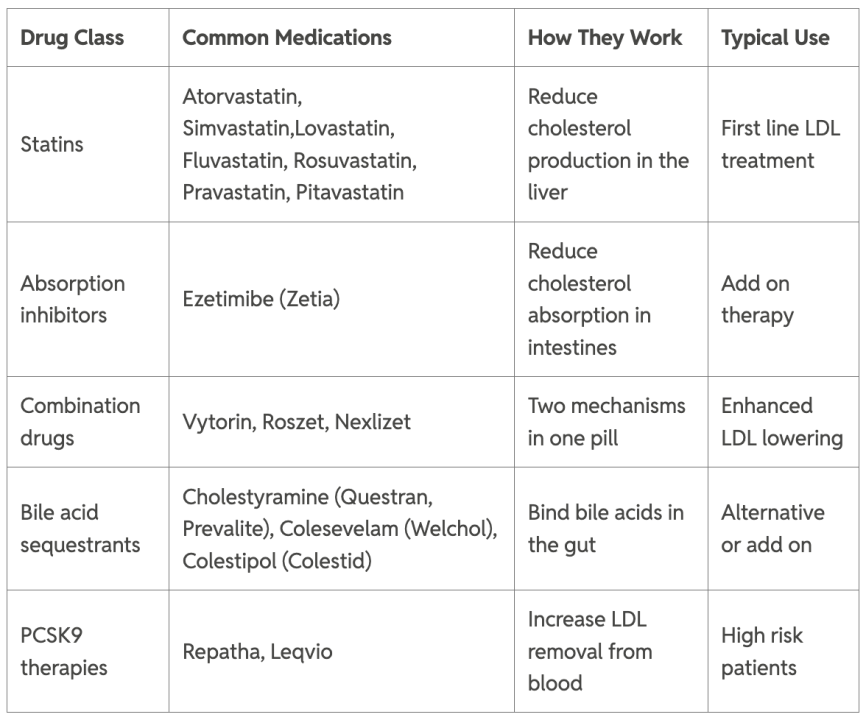
The table below compares the major cholesterol drug classes and their examples.
Common Cholesterol Medications by Class
Cholesterol medication side effects and safety
Like all medications, cholesterol-lowering drugs can cause side effects. Most people tolerate them well, but awareness is important.
Common statin side effects may include:
- Muscle aches.
- Headache.
- Nausea, diarrhea, and upset GI.
- Mild liver enzyme changes.
Nonstatin medications may cause:
- Gastrointestinal symptoms.
- Injection site reactions for injectable therapies.
Doctors monitor cholesterol medication safety through blood tests and follow-up visits. Adjustments can be made if side effects occur.
Which cholesterol medication is safest long-term?
Safety depends on the individual. Statins have decades of data supporting long-term use. For people who cannot tolerate statins, alternatives like ezetimibe, Nexletol, or bile acid sequestrants may be appropriate.
Discussing options with a healthcare provider ensures the best balance of effectiveness and safety.
Natural alternatives and lifestyle support
Some people ask about natural alternatives to statins. Lifestyle changes are an important foundation of cholesterol management.
Helpful strategies include:
- Eating a heart-healthy diet.
- Increasing physical activity.
- Maintaining a healthy weight.
- Reducing saturated fat intake.
While supplements may offer modest benefits, they are not a replacement for prescribed medications in high-risk individuals.
Frequently asked questions about high-cholesterol medications
What are the most effective medications for high cholesterol?
Statins such as atorvastatin and rosuvastatin are highly effective. Advanced therapies like Repatha and Leqvio provide additional LDL reduction for high-risk patients.
How do different cholesterol medications compare?
Statins are first-line. Nonstatins are used when statins are not enough or not tolerated. Combination therapies improve results for some patients.
Are cholesterol medications safe for long-term use?
Yes, most are safe when monitored appropriately. Annual blood examinations of liver enzymes are appropriate. Long-term benefits often outweigh risks.
High-cholesterol medications and prescriptions
High cholesterol is a manageable condition with the right treatment plan. From widely used statins like atorvastatin, rosuvastatin, simvastatin, pravastatin, lovastatin, fluvastatin, and pitavastatin to nonstatin options, such as ezetimibe, Nexletol, Repatha, and Leqvio, there are many effective medications available.
Bile acid sequestrants like cholestyramine (brand names Questran and Prevalite), colesevelam (brand name Welchol) and colestipol (brand name Colestid) provide additional options for specific needs. Combination drugs such as Vytorin, Roszet and Nexlizet simplify treatment for many patients.
Affordability plays a critical role in long-term success.
Note: This article is intended for informational purposes only and does not substitute professional medical advice. Always consult with a qualified healthcare provider for diagnosis and treatment options.
This story was produced by SaveHealth and reviewed and distributed by Stacker.