

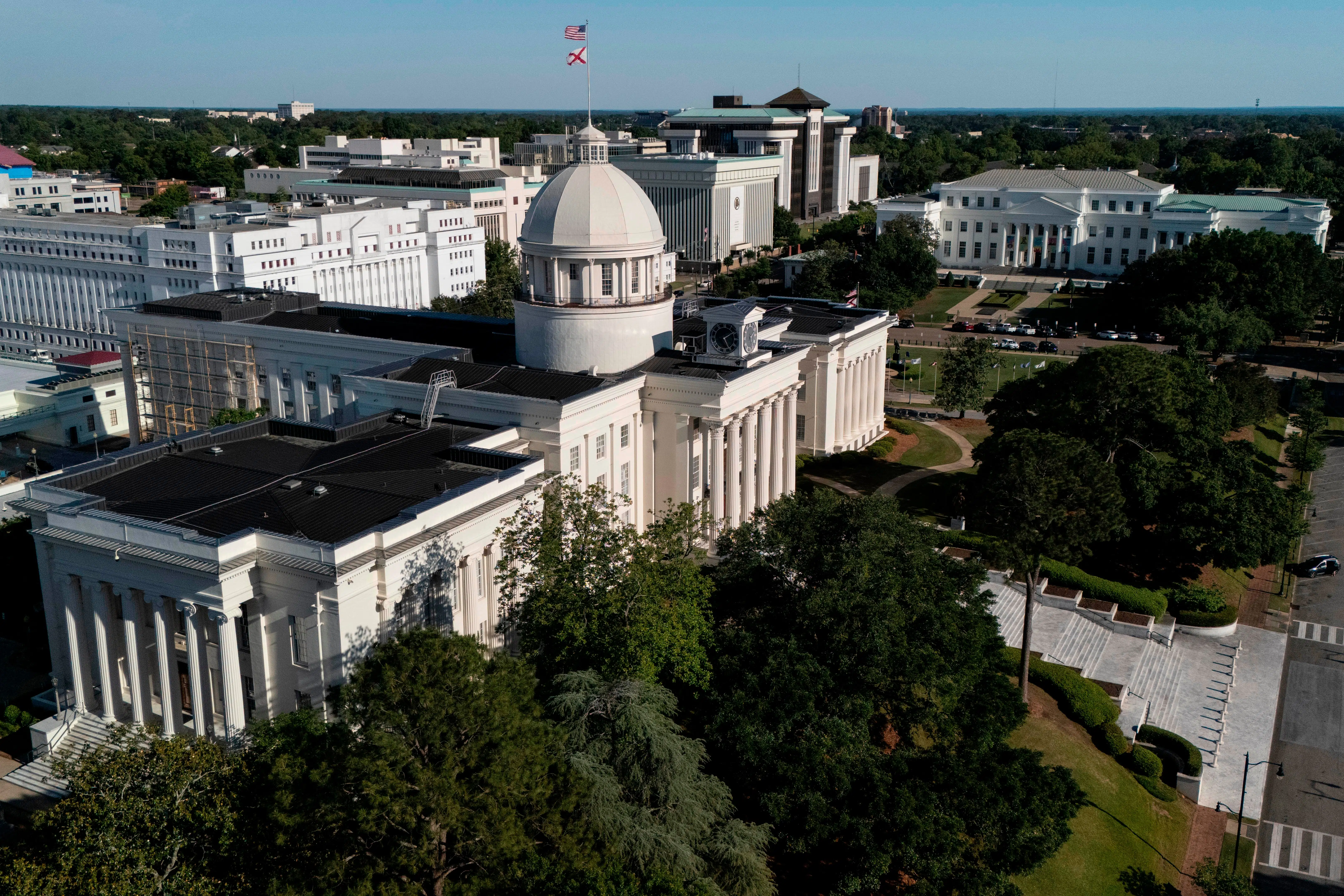
WASHINGTON – Voters in four of Alabama’s seven congressional districts will select U.S. House nominees Tuesday under a new map that eliminates one of the state’s two majority-Black districts currently represented by Democrats.
Primaries for all seven congressional districts were originally scheduled for May 19, but Republican Gov. Kay Ivey postponed the contests for the 1st, 2nd, 6th and 7th Congressional Districts following a U.S. Supreme Court decision that prompted a handful of Republican-controlled Southern states to throw out their congressional maps.
Recommended Videos
The court-inspired actions in Alabama, Louisiana and Tennessee, as well as earlier legislative actions in other states to redraw their boundaries through mid-decade redistricting, were part of a nationwide Republican effort championed by President Donald Trump to maximize the party’s chances of holding its slim U.S. House majority in the 2026 midterm elections.
Alabama's U.S. House members will continue to serve in their current districts until the end of 2026. Candidates in Tuesday's primaries are running under the new Republican-backed boundaries, which go into effect in January 2027. Both of Alabama’s Democratic members of Congress are seeking reelection in their newly configured districts and are unopposed in their primaries.
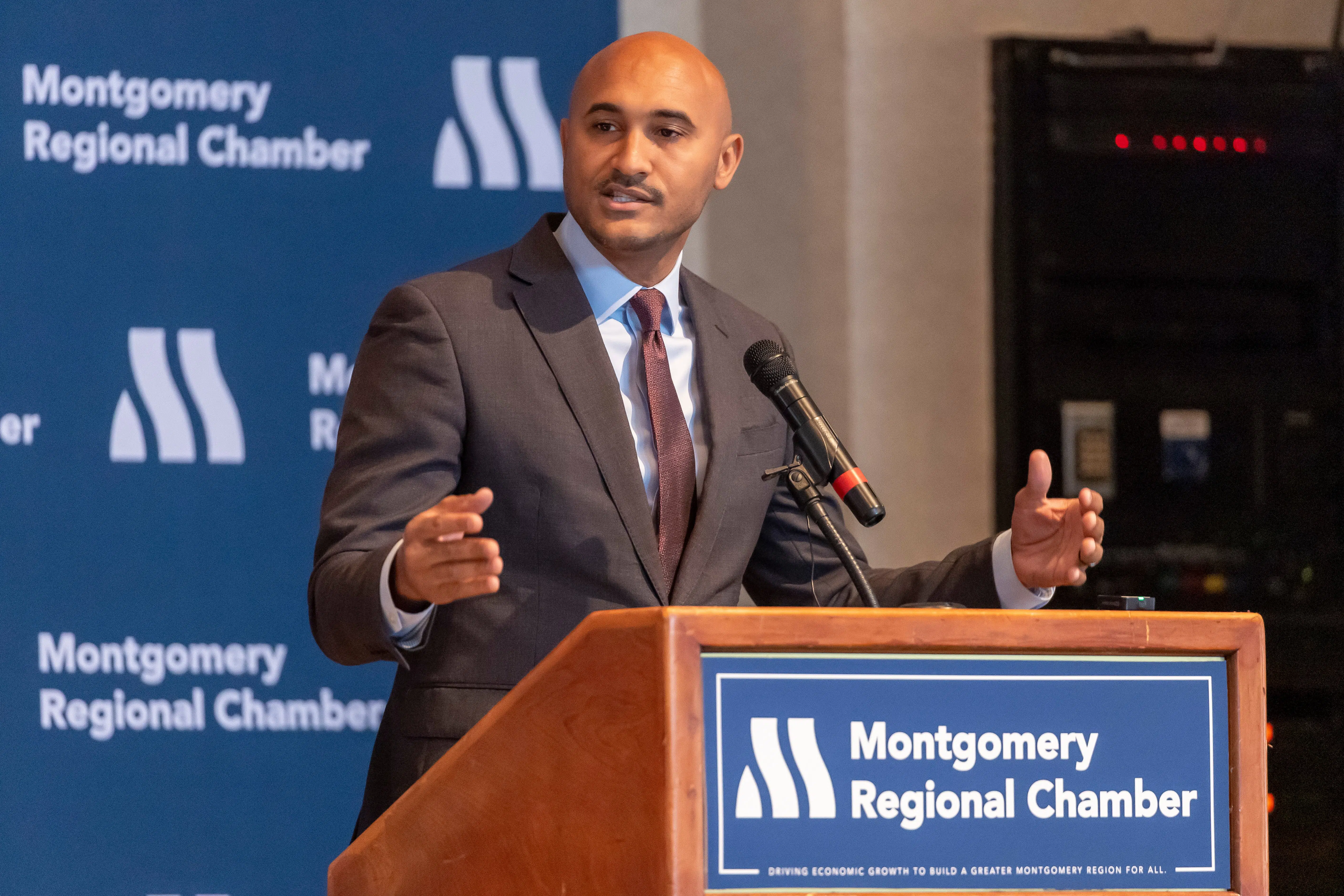
In the 2nd District, where U.S. Rep. Shomari Figures is running for a second term, the Black population will go from half of the population under the current lines to about 40% under the new lines. In the 2024 presidential election, Democratic Vice President Kamala Harris beat Trump in the current district, 53% to 46%. But Trump would have beaten Harris 57% to 42% if the new boundaries had been in effect in 2024.
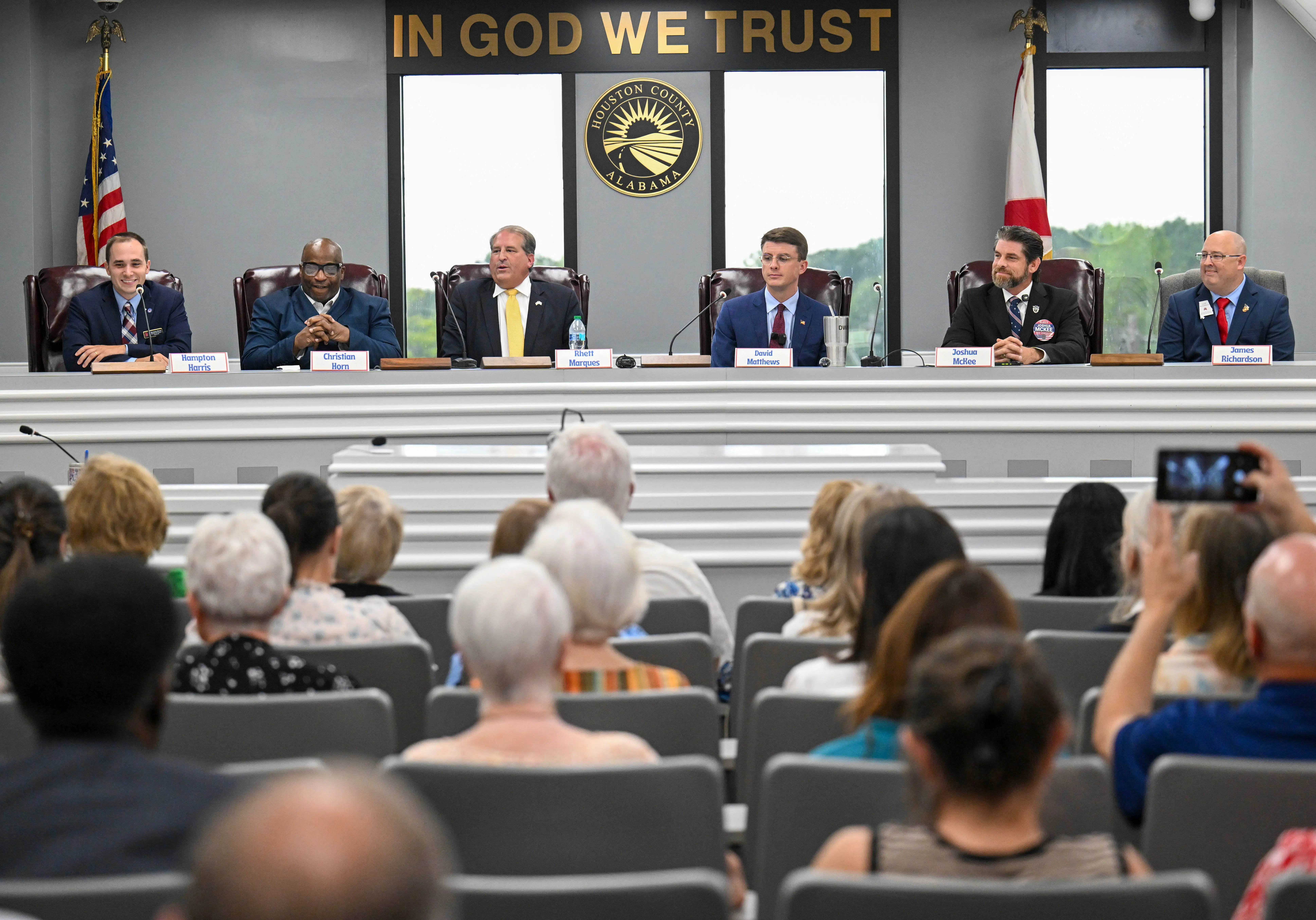
Six Republicans are running to challenge Figures in November, including state Rep. Rhett Marques, Army veteran Joshua McKee and real estate broker Hampton Harris. Trump has endorsed Marques, who is the field’s top fundraiser.
Black residents will maintain a slight majority in the new 7th District, where U.S. Rep. Terri Sewell is running for a ninth term. Harris beat Trump, 61% to 38%, under the current boundaries and would have beaten him by slightly less, 58% to 41%, if the new boundaries had been in effect in 2024. Two Republicans, Ammie Akin and David Perry, are competing for the nomination to unseat Sewell.
Here are some of the key facts about the election and data points the AP Decision Team will monitor as the votes are tallied:
When do polls close?
Polls close at 7 p.m. CT, which is 8 p.m. ET.
What’s on the ballot?
The Associated Press will provide vote results and declare winners in contested primaries for the 1st, 2nd, 6th and 7th Congressional Districts.
Who gets to vote?
The special primaries are open to any registered voters in their respective congressional districts. Although Alabama does not register voters by party, voters will be asked to declare a party preference upon selecting a party’s primary ballot.
How many voters are there?
As of June 1, there were 3.8 million registered voters in Alabama. Each congressional district in the state has a total population of about 718,000.
How many people actually vote?
About 409,000 ballots were cast across the state in the May 19 primaries, which was roughly 11% of registered voters. Past vote totals for the four new congressional districts are unavailable.
How much of the vote is cast early or by absentee ballot?
Relatively few Alabama voters cast their ballots before Election Day. The state is one of the only holdouts in the country not to offer some form of in-person early voting. In the 2024 primaries, about 4% of Democratic primary voters and about 1% of Republican primary voters voted by mail.
When are early and absentee votes released?
Vote release practices vary from county to county. Most counties tend to release results from absentee voting in the first vote update, sometimes along with results from in-person Election Day voting.
How long does vote-counting usually take?
In the May 19 state primary, the AP first reported results at 8:28 p.m. ET, or 28 minutes after polls closed. The last vote update of the night was at 12:54 a.m. ET, with more than 99.9% of total votes counted.
When will the AP declare a winner?
The AP does not make projections and will declare a winner only when it’s determined there is no scenario that would allow a trailing candidate to close the gap. If a race has not been called, the AP will continue to cover any newsworthy developments, such as candidate concessions or declarations of victory. In doing so, the AP will make clear that it has not yet declared a winner and explain why.
How do recounts work?
In 2010, the Alabama attorney general issued an opinion that Alabama’s automatic recount law does not apply to primaries. The AP may declare a winner in a race that is subject to a recount if it can determine the lead is too large for a recount or legal challenge to change the outcome.
Are we there yet?
As of Tuesday, there will be 84 days until the 2026 midterm elections.
___
Follow the AP’s coverage of the 2026 election at https://apnews.com/projects/elections-2026/.