

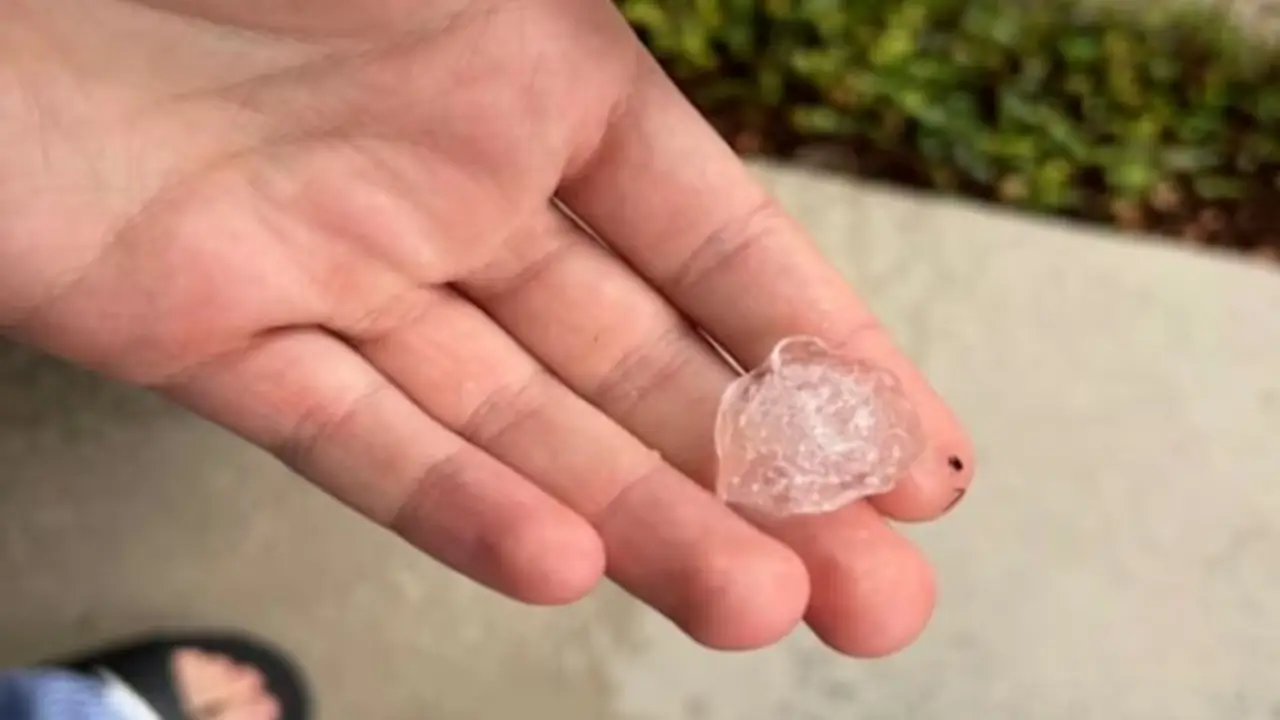
ORLANDO, Fla. – The best chance to see hail in Florida is from March through July, with the peak usually occurring in May. Most hail events happen in late winter and spring, when the air high above the ground is still cold enough for ice to form as the rainy season begins to ramp up.
So how does hail form?
Hail forms inside thunderstorms with strong updrafts, or rising air. These powerful winds carry raindrops high into the storm where temperatures are below freezing. The drops freeze into ice, and if the updraft is strong enough, the hailstone gets carried through the storm multiple times, growing layer by layer.
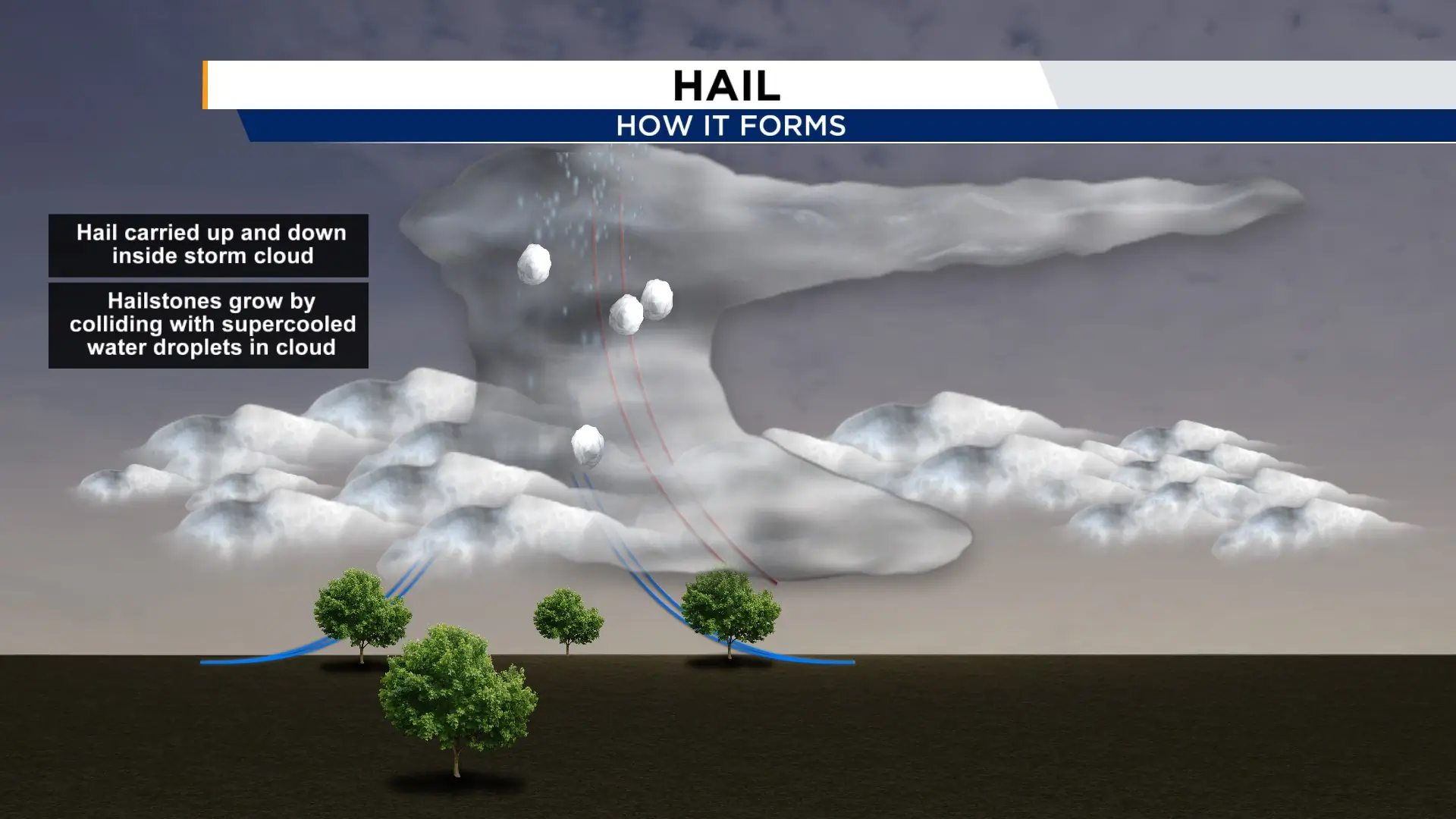
Eventually, the hailstone becomes too heavy for the storm to hold up and falls to the ground. In general, the stronger the updraft, the larger the hail.
If you cut a hailstone in half, it can look a bit like an onion with layers. Clear layers form when water freezes slowly, allowing air bubbles to escape. Cloudy layers form when water freezes quickly in much colder air, trapping bubbles inside. Counting the layers can even give you an idea of how many trips the hailstone made through the storm.
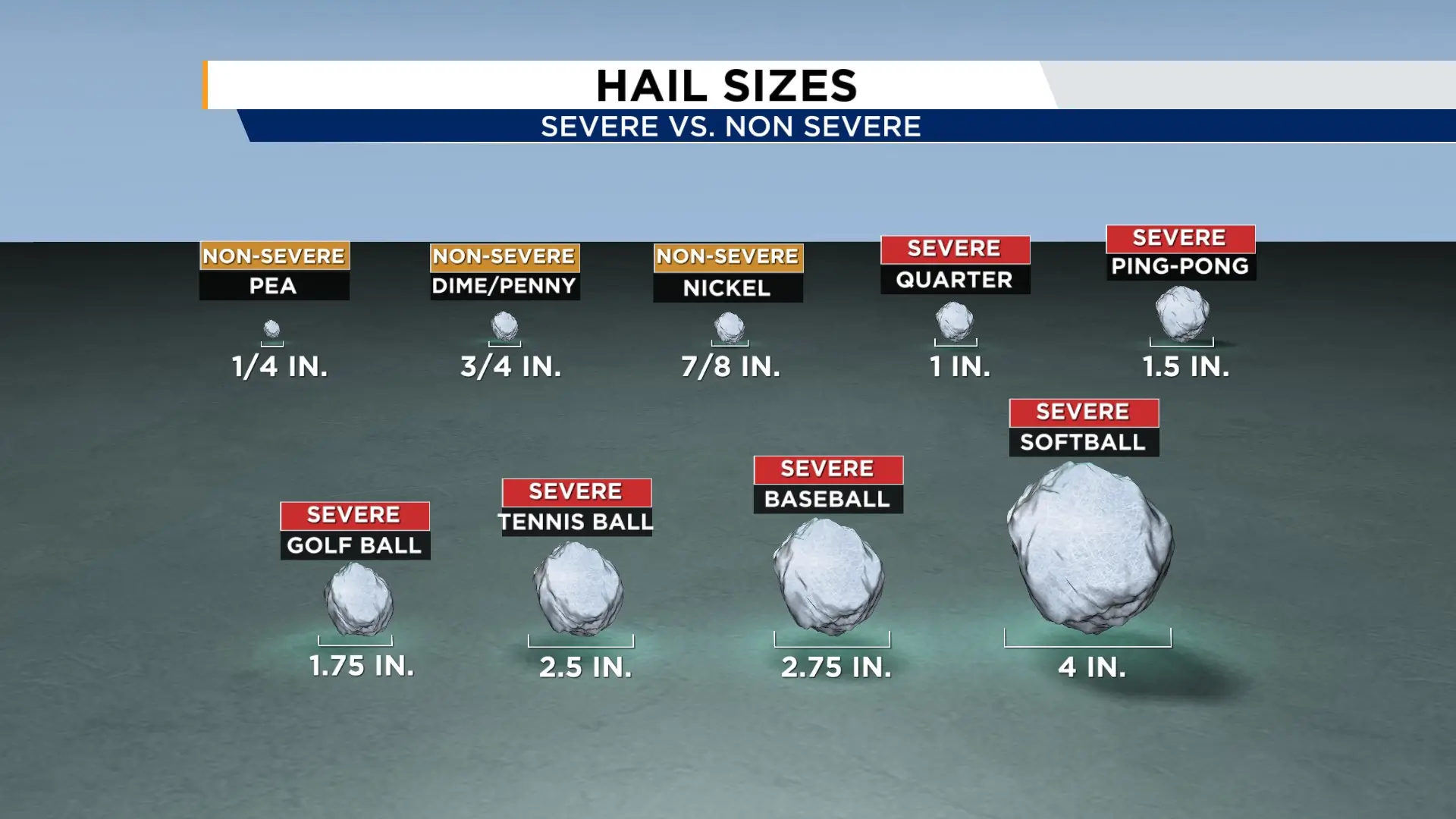
The record for the largest hailstone in Florida is 4.5 inches in diameter. Grapefruit-sized hail has only been reported three times in the state: Polk County in 1996, Bradford County in 2003, and Marion County in 2007.
More recently, a powerful storm dropped 3-inch, teacup-sized hail in Sanford in May 2020. According to the National Weather Service, the hailstone tied the record for the largest hailstone ever reported in East Central Florida.

The News 6 Weather team ensures you're always on top of the day's weather.
