

BREVARD COUNTY, Fla. – In November, Brevard County voters will be asked to renew the Save Our Indian River Lagoon half-cent sales tax.
That’s three months away, but supporters say it’s not too early to get the word out.
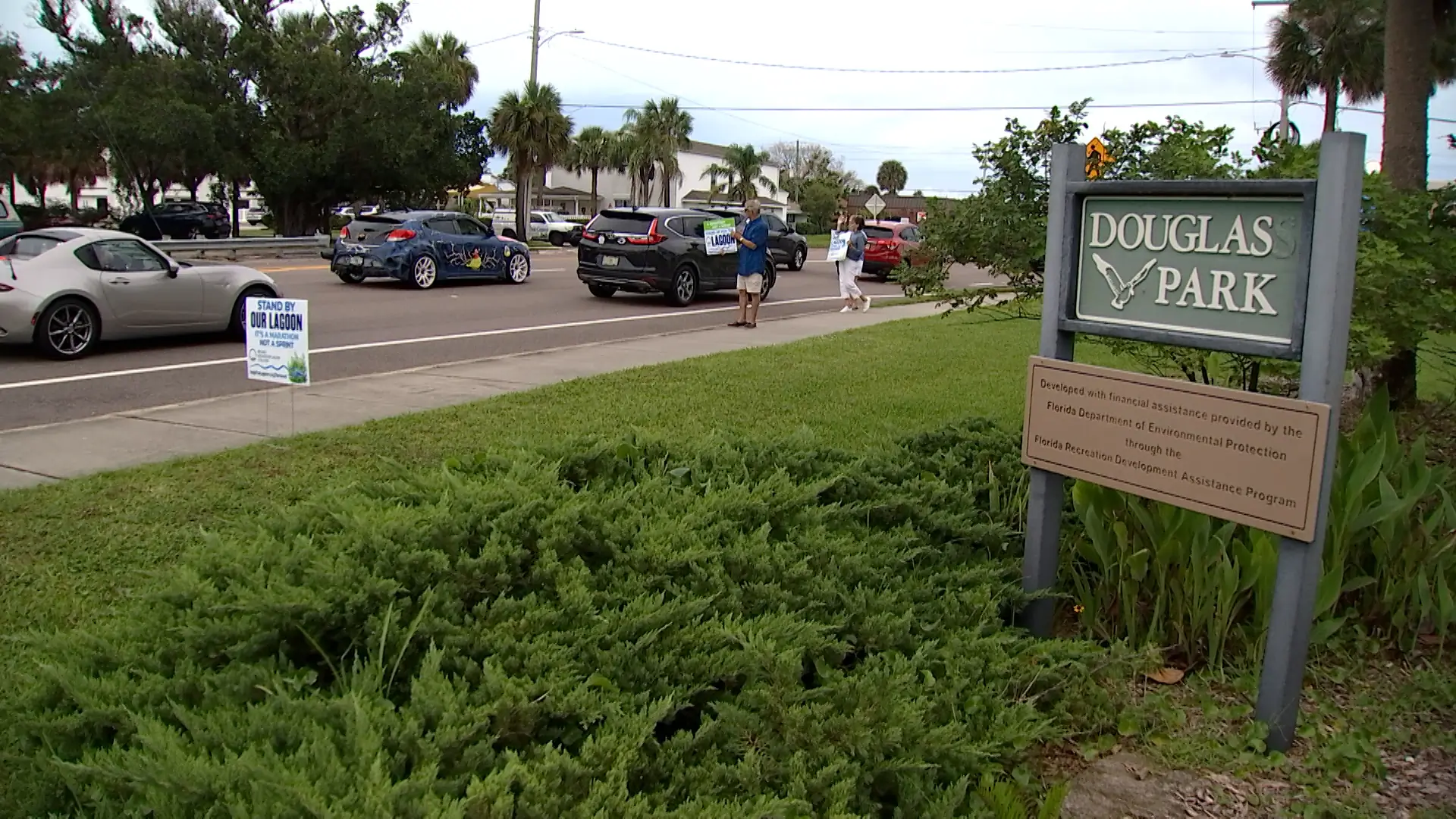
Volunteers from the Brevard Indian River Lagoon Coalition lined the causeway on US Highway 192 between Indialantic and Melbourne one Friday evening, signs in hand, hoping to remind Brevard County drivers that the future of the Indian River Lagoon is on the November ballot.
The nonprofit is dedicated to advocating for the protection and restoration of the Indian River Lagoon.
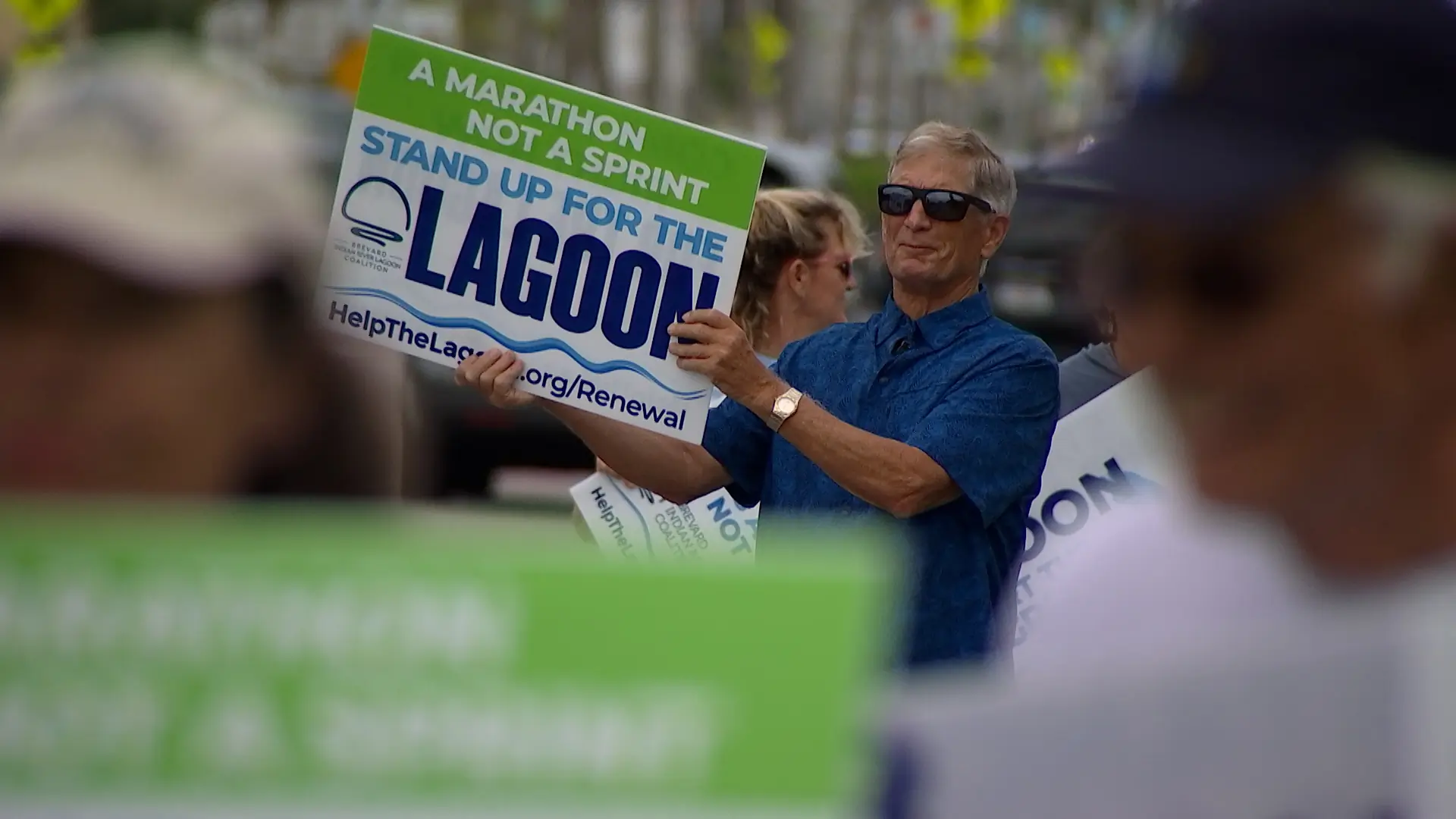
Vince Lamb, a representative with the coalition, said the effort is all about awareness — and urgency.
“Most people have no idea that this is going to be on the ballot in November,” Lamb said. “We’re really confident that if people just get educated on what it does, they’ll vote for it.”
The half-cent sales tax, known as the Save Our Indian River Lagoon plan, was first passed by Brevard County voters in 2016. Over the past 10 years, the program has generated more than $500 million for lagoon restoration efforts. But the tax expires this November and must be renewed by voters.
Lamb said the results speak for themselves.
“The water is cleaner. The algae blooms are less frequent and less severe. Seagrass is coming back,” he said. “There’s a lot of evidence it is working, but we’re far from done. So we need for it to be renewed.”
With an estimated 250,000 to 300,000 Brevard County residents expected to vote on Nov. 3, Lamb said the coalition needs a clear majority — somewhere between 130,000 and 150,000 votes — to get the measure passed.
“I don’t want to wake up on November 4th and find that we needed a hundred more votes or something,” Lamb said. “There’s a lot of evidence that we have good public support for it, but we’re not taking it for granted. We’re out here working.”
To reach voters, the coalition plans to deploy roughly 300 volunteers to walk neighborhoods across Brevard County, knocking on doors and distributing information. Sign-waving events are also planned twice a week through the summer, ramping up through September and October ahead of early voting.
“We need 130,000 votes. We get them one at a time,” Lamb said.
Thomas Ghesquiere, a volunteer at the event, said his love of the water brought him out on a Friday evening.
“I love living here, and a large part of the reason I love it here is because of the water in the lagoon,” Ghesquiere said. “You get one good chance to take care of it, and if you blow it, it’s gone forever.”
Ghesquiere described the lagoon’s broad appeal — from early-morning anglers to families enjoying a boat ride to waterfront restaurants.
“It impacts so many different ways because it affects families, individuals,” he said. “It’s just a great resource.”
For many volunteers, the effort is personal. Mary McIntyre said she has lived in the area since 1979 and remembers when the lagoon was a vibrant source of food and recreation.
“My husband and kids would fish this and we would eat the fish and it was just wonderful. We would go water skiing,” McIntyre said. “Now I don’t think anyone’s eating the fish out of the lagoon. So we really absolutely need to get it back to that point.”
Dr. Chris Edwards, president of the Friends of the Thousand Islands nonprofit and a self-described lover of the lagoon, said he has seen the water quality decline over more than 25 years of living in the area. He said visible improvements from the tax — like septic-to-sewer conversions — have made a real difference.
“Where there was a septic-to-sewer conversion, I saw that change,” Edwards said. “I would ride my bike every Sunday and it would smell. They added sewer to the community. The smell is gone. So there’s an example of what the sales tax has done.”
Edwards added that the region’s growing population is putting additional pressure on the lagoon’s recovery.
“It’s a long way from being healthy,” he said. “And the amount of population that’s growing here is only stressing the lagoon out more.”
Elizabeth Blackford, another volunteer at the event, said she first traveled through the area by sailboat in 1992 and was struck by its beauty. She said the decline she’s witnessed since moving to the area about 15 years ago makes the tax renewal essential.
“The quality of the Indian River Lagoon has declined,” Blackford said. “Ten years ago, the citizens here voted to tax themselves to try and clean it up. And the fact that they were willing to suck up an additional half-cent sales tax for 10 years tells us all how important it is.”
Blackford said she is not worried the measure will fail.
“I think the citizens here know just how important the lagoon is to them, and they’re willing to pay for paradise,” she said.
She also offered a reminder that residents can take action beyond the ballot box.
“People in their own backyards can stop fertilizing and throw their grass clippings back on their lawns, and that will help stop the pollution that runs off to the lagoon,” Blackford said.
Lamb said the coalition is confident — but not complacent. In 2016, more than 60% of voters approved the original tax.
“Asking people to tax themselves to protect the waterway is quite an ask,” Lamb said. “The program has actually been working — almost everybody believes it’s been working. So it shouldn’t be terribly hard to get it renewed, but we’re not taking any chances.”
